

The “Teaching Factory” and Singapore’s Industrial Revolution
Industrial training centres like the recently demolished German-Singapore Institute played a vital role in upgrading the nation’s manufacturing sector.
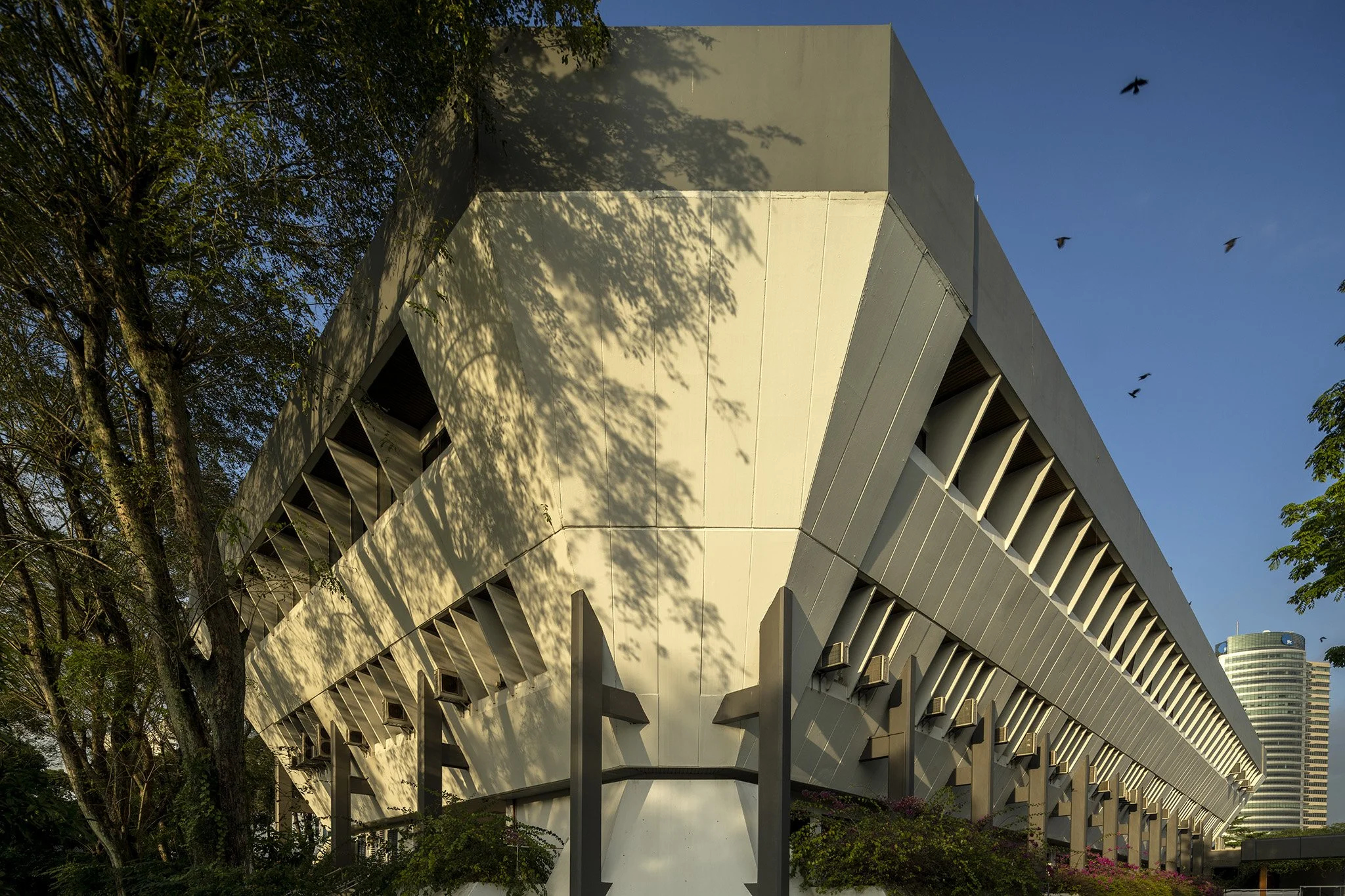
The German-Singapore Institute. Photo by Darren Soh.
A decade after launching an industrialisation programme in 1960, Singapore’s entrepot-driven economy had successfully grown an industrial wing too. The country’s Gross Domestic Product grew an average of 10.4% per year, expanding from US$664 million in 1960 to US$1,886 million in 1970. Unemployment had also fell from its peak of 9% in 1966 to 6%. However, its then finance minister Hon Sui Sen noted in a 1973 speech that the rapid growth had brought about a new set of challenges. The declining unemployment meant labour productivity needed to raise to compensate for the limited supply. There was also facing increasing competition for foreign investments from its regional neighbours. Thus, Singapore needed a new industrial strategy in the coming years.
“In the manufacturing sector, the main thrust will be to increase the total and the quality of the manufacturing workforce required for a sustained growth of the manufacturing industries. Not only more capital-intensive industries and those requiring more highly skilled labour but also industries with greater export potential will be favoured,” Hon declared.¹
To support the drive for more “high-tech” manufacturing in Singapore, the government’s industrial development arm, the Jurong Town Corporation (JTC), began developing new facilities to attract the right industrialists. For instance, the design of ready-made standard factories and flatted factories were improved to better accommodate the use of machines and automation. It also embarked on the development of a new kind of industrial estate catered for knowledge workers that became known as the Singapore Science Park. Beyond catering to manufacturing needs, JTC also started developing spaces for learning in the form of industrial training centres. They were part of an Economic Development Board (EDB) plan to upgrade Singapore’ industrial workforce in partnership with industrialists and industrialised nations. Such centres would bridge the then nascent local vocational training system by accelerating the training of labour for more advanced industrial needs.
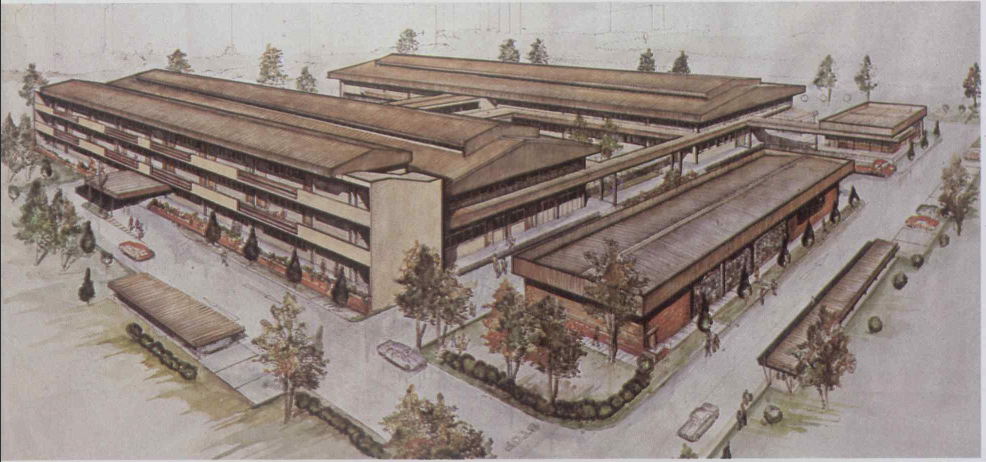
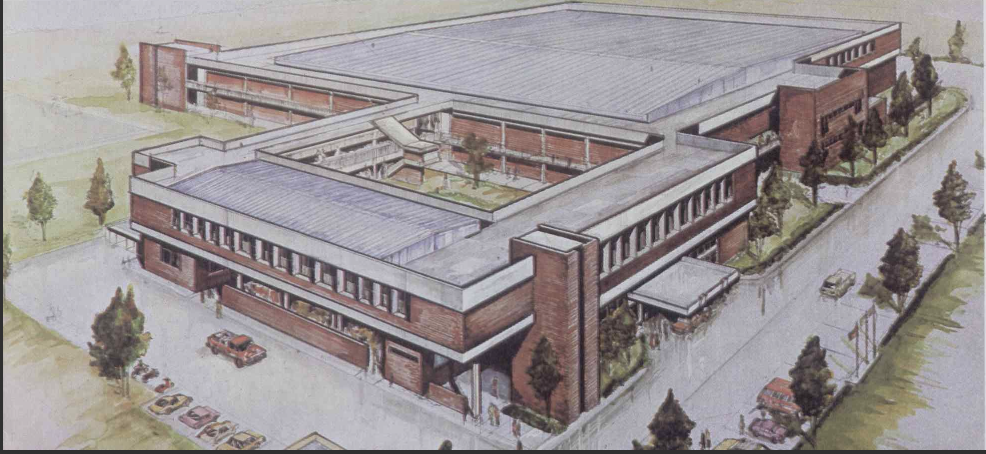
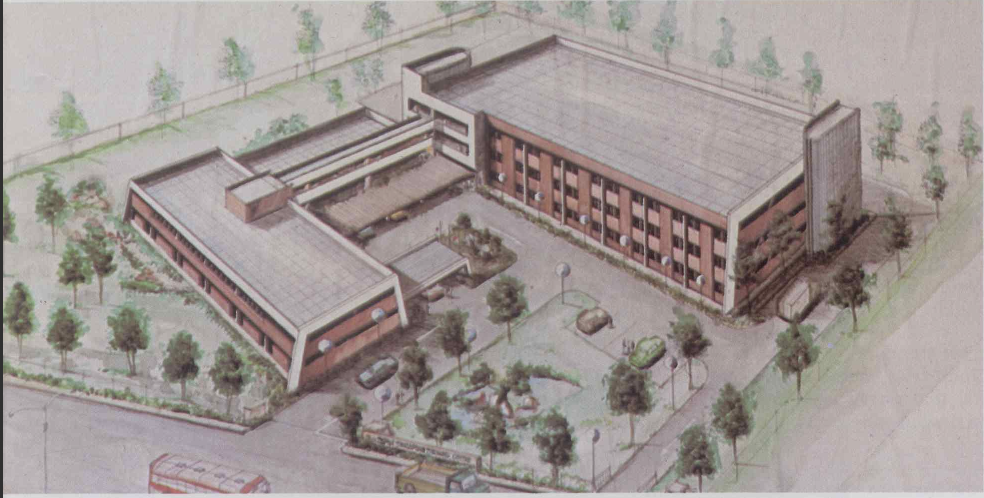
Source: JTC Annual Report 1978
One of the earliest to be ready was the Tata Government Training Centre completed in 1979. The centre supported by the Indian conglomerate had first started out in the Jurong Vocational Institute. It now had a dedicated facility on a 15,177 sqm site at Chin Bee Drive to prepare tool and die-makers and metal machinists. Another example was the Rollei Government Training Centre in Kallang Junction that trained skilled craftsman for the optics and mechanical industries. After Rollei closed down in 1981, the centre was taken over by Swiss electrical equipment manufacturer BBC Brown Boveri.² In 1988, both the Tata and Rollei centres became known as the Precision Engineering Institute. There was also a Philips Government Training Centre, which the Dutch company developed on its own next to their factory at Jalan Ahmad Ibrahim.
Besides establishing training centres with industrialists, there were also those started with leading industrialised nations. The Japan-Singapore Training Centre, which opened in 1982 next to JTC’s flatted factories in Jalan Bukit Merah, equipped workers with skills for the electronics industries. In Jurong, the German-Singapore Institute and French-Singapore Institute prepared technicians in production technology and electrotechnology respectively. Both institutes were designed in a Brutalist aesthetic that complemented the neighbouring Jurong Town Hall (1974), Singapore Science Centre (1977) and Unity House (1982–2008).
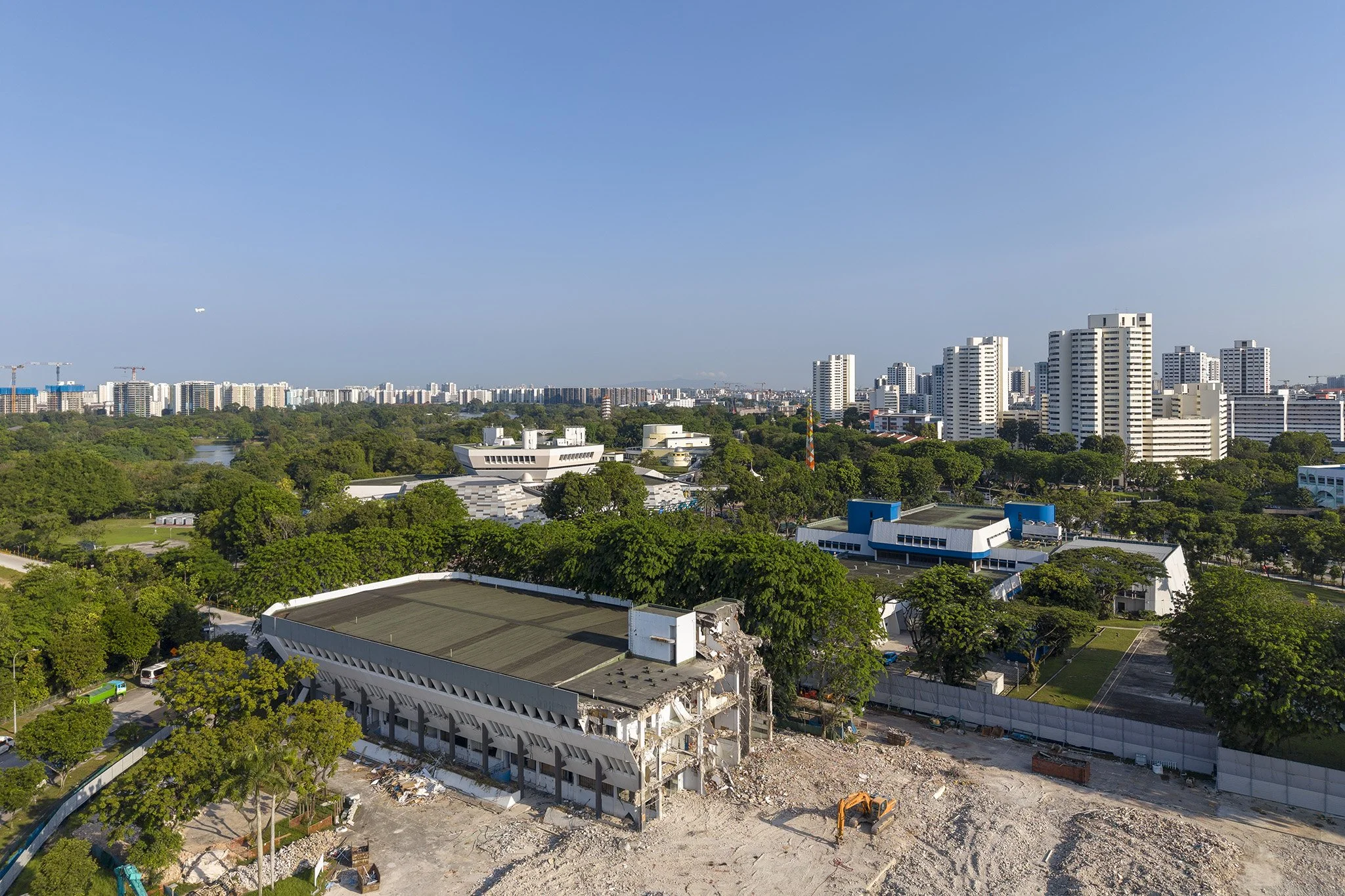
The partially demolished German-Singapore Institute (foreground), French-Singapore Institute (middle) and Singapore Science Centre (background). Photo by Darren Soh.
The main building of the German-Singapore Institute, in particular, came in an elongated block with inward-sloping walls that echoed Jurong Town Hall. It was connected to two workshops and a canteen to form a sprawling 31,000 square metres campus.³ According to then JTC architects Chng Peng Soon and Daisy Hia, the institute’s design was directed by the German Agency for Technical Cooperation (GTZ).⁴ Chng was even sent on a two-week study trip to Germany to better understand their requirements.⁵ The curriculum of the “teaching factory” was based on the Germany system of technician training and its team of 13 experts from West Germany and 32 locals oversaw a two-year full-time diploma and a six-month full-time course for vocational instructors.⁶
The establishment of five industrial training centres in Jurong—the exception being the Japan-Singapore Institute—turned it into a “premier centre” for industrial learning in the 1980s.⁷ Some saw this as a positive development for the government’s plans to transform Jurong into Singapore’s second business district.⁸ The siting of the German and French institutes next to Jurong Town Hall was complementary to JTC’s plans for an upcoming business district across the road, anchored by an International Petroleum Centre. This eventually fell through after Kuwait pulled out and alternative developments were delayed as Singapore experienced its first recession in 1985.
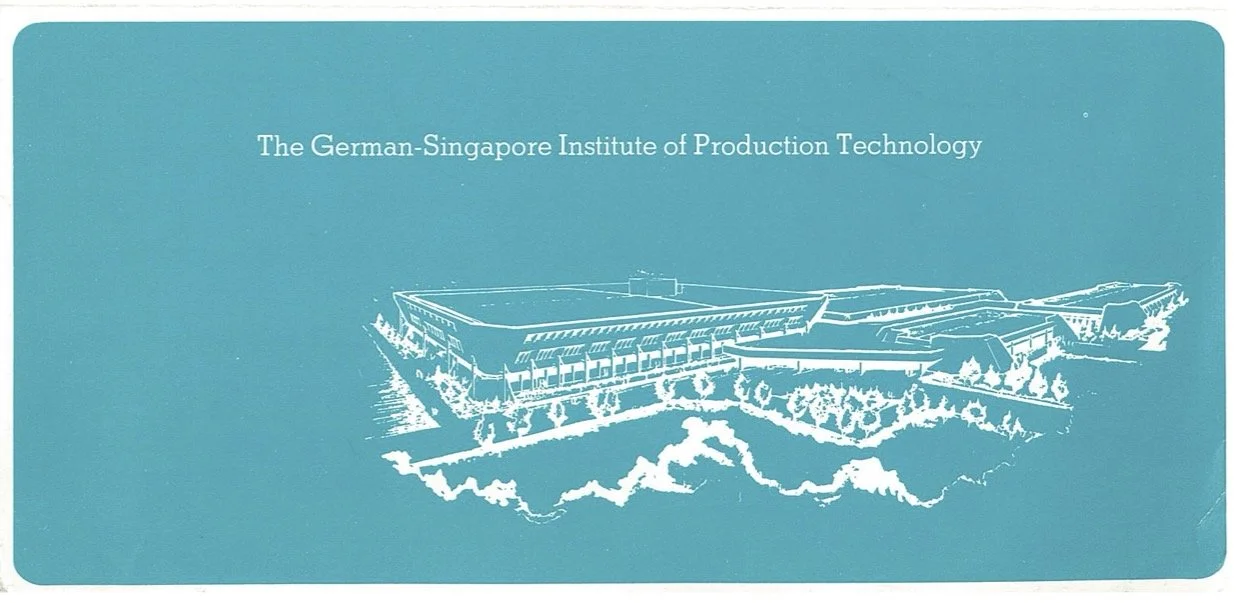
Sketch of German-Singapore Institute on a brochure, c. 1980s.
The system of industrial training centres came to an end in the 1992 when EDB transferred them to the mainstream technical education system. The Precision Engineering Institute and Philips’ training centre became part of the Institute of Technical Education. The German, French and Japanese institutes were merged to form the School of Engineering in Nanyang Polytechnic. The facilities JTC built for them were adapted for other uses. After the French and German institutes vacated the premises for polytechnic’s new campus in 2000, they became a home for the newly established Pioneer Junior College and then the private university Informatics Academy. Around the 2010s, the German-Singapore Institute became a sports and recreation venue known as Bestway Centre.
As part of the government’s renewed push to turn Jurong into Singapore’s next Central Business District, it released the first sale of site for the upcoming Jurong Lake District to developers in March 2026. The 3.7-ha plot known as Town Hall Link consists of the German-Singapore Institute, which was demolished to make way for what is envisioned to become a mixed-use development. It follows a similar fate of other training centres. The only two still standing today are the premises of the Japan-Singapore Institute and the French-Singapore Institute. While the former is currently not in use, the latter was turned into a transitional care facility in 2023 as part of the government’s efforts to reduce the strain on Singapore’s hospital capacities.
The physical traces of industrial training centres have largely disappeared, but their impact lives on. During their over two decades of operations, they trained some 12,000 craftsmen and technicians who were highly sought after by the industry.⁹ The German-Singapore Institute even became a showpiece for the German government’s technical assistance programme and similar ones were developed in Malaysia and China.¹⁰
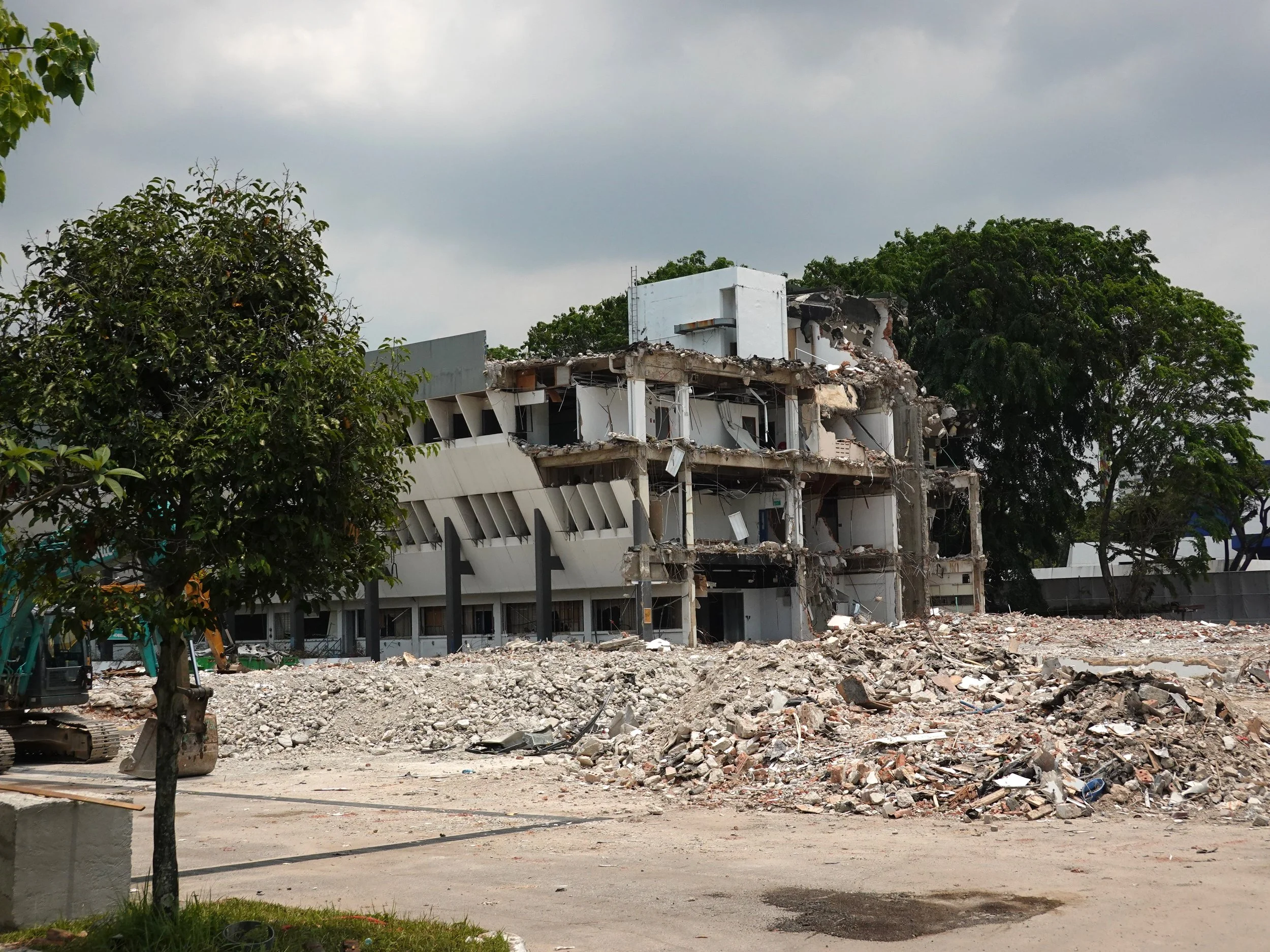
The German-Singapore Institute, April 2026. Photo by Justin Zhuang.
Sui Sen Hon, ‘Address by Mr Hon Sui Sen, Minister for Finance, at the Financial Times (London) Conference on “Business Opportunities in the Pacific Basin” Held at the Shangri-La Hotel, Singapore on Wednesday, 3rd October 1973, at 2.05 P.M.’, Ministry of Culture, 3 October 1973, National Archives of Singapore, https://www.nas.gov.sg/archivesonline/speeches/record-details/7cc79a49-115d-11e3-83d5-0050568939ad.
‘BBC (S) Will Help Run Rollei Training Centre’, The Straits Times (Singapore), 3 March 1982.
Tiang Keng Soh, ‘Teaching Factory to Open Doors next Month’, The Straits Times (Singapore), 11 January 1982.
Personal interviews with author.
‘German-S’pore Vocational Institute Will Cost $10 Million’, The Straits Times, 2 August 1979.
Soh, ‘Teaching Factory to Open Doors next Month’.
Paul Jansen, ‘Industrial Training: How Jurong Is Showing the Way’, The Straits Times, 17 October 1980.
Jansen, ‘Industrial Training: How Jurong Is Showing the Way’.
Anna Teo, Honing Craftsmen from Raw Talent, 13 November 1992.
Teo, Honing Craftsmen from Raw Talent.